
For over 175 years, U.S. Baird has been an industry blueprint.
From humble beginnings as the brainchild of a 10-year-old visionary in the mid-1800s, to the demands of automated industry today, U.S. Baird has stood the test of time for over a century.
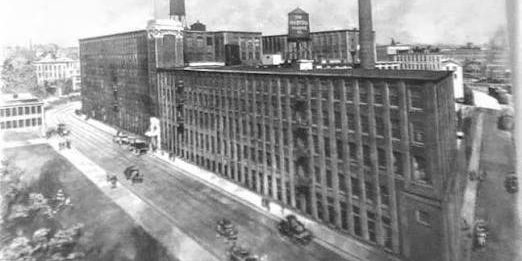
From its beginnings as a small machine shop founded by Joseph H. Baird in 1846, U.S. Baird grew into one of America's most respected builders of high-production machinery. What began in Huntington, Connecticut, evolved through moves to Oakville and ultimately Stratford, where the company established the manufacturing campus that would define its identity for nearly a century. Today, it continues its legacy as a division of Bliss Munitions Equipment in Michigan, USA.
Throughout its history, Baird remained driven by its founder's philosophy of designing machines that could replace repetitive manual labor with fast, reliable, and highly precise automated production.
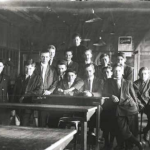
A Heritage of Precision Engineering
Although ownership changed over the years and manufacturing eventually moved, the U.S. Baird name endured because of the lasting value of its engineering, its machines, and the people behind them. More than 175 years after Joseph H. Baird founded the company, thousands of U.S. Baird machines remain in operation around the world—a testament to a legacy built on innovation, craftsmanship, and an unwavering commitment to advancing automated manufacturing.
1836
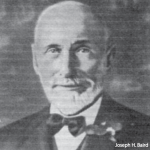
Joseph H. Baird
At just ten years old, Joseph began working at the Scovill & Buckingham Company in Oakville, Connecticut, a manufacturer of household goods and general hardware. Like many apprentices of the era, he learned a skilled trade while receiving a practical education centered on reading, writing, and arithmetic. Even at a young age, Baird displayed an inventive mind and an exceptional curiosity for how things worked. After spending nine years honing his craft and developing his mechanical abilities, he left Scovill & Buckingham to establish a business of his own.
1846
The Baird Machine Company
In 1846, at the age of 19, Joseph Baird trademarked and founded the Baird Machine Company in Huntington, Connecticut.
1850
The Baird Pin Company
After abandoning operations for a couple years, Baird returned to his craft, renamed as The Baird Pin Company, which ran successfully for nearly 40 years.
1891
Fred E. Warner
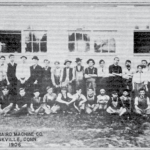
In 1891, the company was reorganized with a new partner, Fred E. Warner, and renamed to Baird & Warner. A short time later, the company was renamed again to Baird Machine Company, and relocated to a larger facility in Oakville, Connecticut.
1894
The Baird Machinery Corporation is Founded
In 1894, Baird sold his complete share to Charles L. Warner (no relation to Fred E. Warner). Under Warner's leadership, the company was incorporated and renamed Baird Machinery Corporation, and became a widely known contender in military and U.S. Navy contracts to supply machinery for workshops.
1910
Arthur J. Lewis II Era
In 1910, Arthur J. Lewis II was hired on a contractual basis to redesign machinery, eventually becoming Baird's chief engineer. His work largely established the product families still associated with U.S. Baird today and is credited with developing many of defining machines: Four Slide machines, Multiple Spindle Chucking Machines, and Transfer Presses.
1912
First Historic Expansion
A 1912 article in 'The Iron Age' describes the facility in great detail as a model of modern machine shop design: for production efficiency, employee safety and easy expansion. Equipment and furnishings included a Shaw traveling crane, movable steel staircase, G. Drouve Co. skylights, Yale and Towne traveling hoist, Niles-Bement-Pond steam hammer, Terry steam turbines for power generation, General Fire Extinguisher Co. automatic sprinkers, and an internal Autocall phone system. Products were industrial machines such as wire and ribbon metal formers, presses, tumbling equipment, automatic chucking machines, and slide form machines.
1920-1930s.
Automotive Boom & Henry Ford
Charles L. Warner built a close friendship with Henry Ford, whom approached Baird seeking a faster way to machine cast-iron pistons. Baird designed a multiple-spindle chucking machine capable of machining a piston in roughly 21 seconds, which Ford ordered approximately 50 of.
Eventually Baird became the primary supplier of these machines for Ford, General Motors and Chrysler, with every Model A Ford reportedly using pistons produced on Baird equipment.
1940-1945
WWII
To meet the massive influx of U.S. government contracts, Baird rapidly expanded its Stratford manufacturing footprint. Between 1940 and 1945, the company built a series of steel-frame production buildings and added large extensions to its core structures to facilitate 24/7 manufacturing operations. Baird became a crucial supplier of the high-speed machinery required for mass-producing munitions, hardware, and wire goods.
1940s-1961
Leon A. Warner & Beaver Tractor
1980s
International Competition & Continued Production
1996
150 Years
U.S. Baird officially celebrated its 150th year in business.
2005
A Challenging Era
U.S. Baird begins experiencing significant employment and production declines amid increasing international competition. Federal trade investigators later determine that increased imports of competing transfer presses contributed importantly to the decline.
2007
First Asset Acqusition
2026
Bliss Munitions Equipment Acquires U.S. Baird
Present
Now
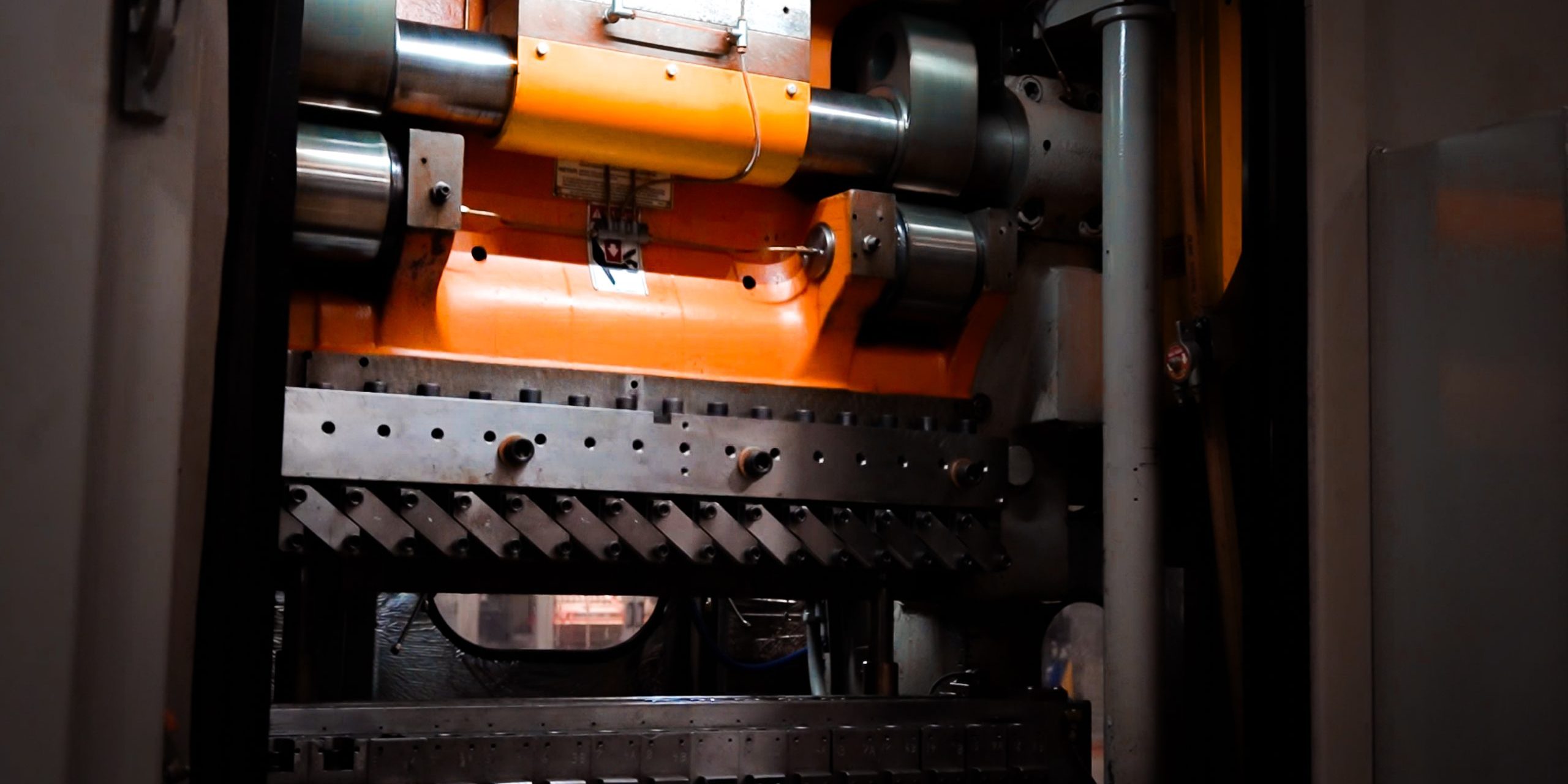
Today, U.S. Baird is a global provider of transfer presses, backed by the investment, tooling expertise and turnkey production capabilities of Bliss Munitions Equipment. Serving various industries, U.S. Baird LLC represents a powerful convergence of legacy engineering excellence and forward-looking manufacturing capability, providing end-to-end solutions in tool design and build, equipment rebuilds, spare parts, and service.